
Non-banking entities such as fintech firms will have to tap into use cases beyond peer-to-peer (P2P) and peer-to-merchant (P2M) transactions to scale up the presence of the retail version of the central bank digital currency (CBDC), which is also known as the e, said industry players. These use cases will enable programmable transactions across domains, including the government's direct benefit transfer (DBT) schemes, with subsidies restricted to specific purposes such as food coupons, hospital bills, fertilisers, pesticides, and cross-border remittances.

As the government is all set to roll out direct cash transfer for its welfare schemes, the National Payment Corporation (NPCI) on Thursday said seven banks have already implemented the Aadhar-enabled payment system (AEPS) and seven more are in the process of doing so.

Use these loans to meet emergency needs, and not to fund holidays or luxury purchases.

GST 2.0 may cushion consumers against US tariffs, but like the 2019 corporate tax cut, it risks being another tactical fix rather than a structural growth strategy, expects Debashis Basu.

The Commission concluded that the bank officials had evidently been negligent in failing to compare the signature prior to making payment, notes Jehangir B Gai.

To push digital transactions in rural and semi-urban areas, the Reserve Bank of India (RBI) on Monday issued a framework allowing offline payments up to Rs 200 per transaction, subject to an overall limit of Rs 2,000. An offline digital payment means a transaction that does not require internet or telecom connectivity. Under the offline mode, payments can be carried out face-to-face (proximity mode) using any channel or instrument like cards, wallets, and mobile devices.

Since Sanjay Malhotra took office as governor in December, the Reserve Bank of India (RBI) has adopted a more accommodative stance, which bodes well for banking and the economy as they navigate a growth slowdown, according to analysts.

In a move to strengthen governance in private sector banks and wholly-owned subsidiaries of foreign banks, the Reserve Bank of India (RBI) on Wednesday directed them to have at least two wholetime directors. Lenders that do not meet the requirement will have to submit the names for the RBI's approval within four months. Banks need prior approval from the banking regulator for the appointment of wholetime directors.

Pre-initial public offering (IPO) allotments have fallen out of favour over the past two years amidst buoyant primary markets and increasing average float sizes. In 2023, 13 firms raised a record Rs 1,074 crore through pre-IPO placements.

Public-sector banks, which are the largest employers in the banking space, have seen a drop in clerical staff over the years.
.jpg)
Reliance, Birla Group, Airtel eye small finance banks.

The Congress party in India has accused the government of "impropriety" in the sudden termination of KV Subramanian's position as India's executive director at the IMF, alleging it was linked to the Union Bank of India's purchase of two lakh copies of his book. The party also questioned the government's stance on Pakistan's request for a loan from the IMF.

Markets regulator Sebi has proposed introducing a single window access for low risk foreign investors seeking to participate in the Indian securities market, a move aimed at simplifying compliance and enhancing the country's attractiveness as an investment destination.

Tata Sons Ltd, the holding company of the $150 billion Tata group, may be forced to infuse fresh capital into its loss-making telecom arm, Tata Teleservices Ltd (TTSL). This is because TTSL has to pay Rs 19,256 crore adjusted gross revenue (AGR) along with other dues to the central government by March 2026.

UPI topped Rs 24 trillion in value of transactions and 19 billion in volume for the first time after becoming operational in April 2016.

rediffGURU T S Khurana answers readers' personal income tax queries.

Mauritius-based Hinduja group firm IndusInd International Holdings (IIHL) has informed the administrator of Reliance Capital that it is ready with its equity contribution of Rs 2,750 crore in cash to acquire the bankrupt firm, but it wants certain conditions to be met in accordance with the resolution plan before transferring the amount. IIHL has also filed an application with the Mumbai Bench of the National Company Law Tribunal (NCLT), seeking directions for the administrator and the committee of creditors (CoC) to complete all pending activities to close the transaction and not let the lenders invoke the bank guarantees provided by the firm earlier.
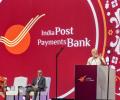
Key questions remain about the operational and financial viability of a completely paperless bank such as India Post, says Mayank Jain.
Customers would be able to make money transfers, pay utility bills and recharge their mobile and DTH connections with just one click and a single PIN entry

Better protection for depositors and investors was one of the chief considerations in Union Finance Minister Nirmala Sitharaman introducing, on Friday, the Banking Laws (Amendment) Bill, 2024, in the Lok Sabha to amend four pieces of legislation. This amendment is also to improve audit quality in public-sector banks (PSBs), offer consistency in reporting by banks to the Reserve Bank of India (RBI), and provide for an increase in the tenure of directors in cooperative banks.
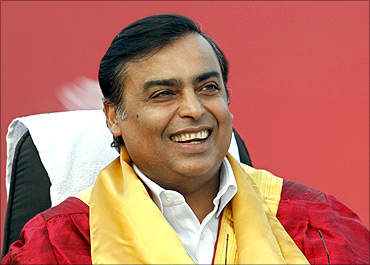
Payments banks will mainly deal in remittance services and accept deposits of up to Rs 1 lakh.

'Illegal gambling operators are systematically exploiting India's advertising and payment infrastructure, siphoning off crores of rupees from outside the country.'
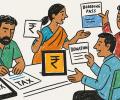
One of the most exploited provisions is Section 10(13A), which permits exemption on HRA.

A nationwide strike called by trade unions to protest against the central government's labor policies had a mixed impact across India. While normal life remained largely unaffected in most parts of the country, some sectors like banking, transport, and insurance experienced disruptions. Sporadic incidents of violence were reported in West Bengal.

When the police conducted a probe into it, a mega fraud worth over Rs 16,180 crore came to light, the official said quoting the FIR.

Fintech firm One97 Communications, which owns Paytm brand, on Friday said its loss has widened to Rs 840 crore in the quarter ended June 30, primarily due to continued impact of restrictions on Paytm Payments Bank Ltd. The company had posted a loss of Rs 358.4 crore in the same period a year ago, according to a regulatory filing by the company. The consolidated revenue of Paytm declined 33.48 per cent to Rs 1,639.1 crore during the reported quarter, from Rs 2,464.2 crore in the same period a year ago.

'The larger and more opaque this shadow economy becomes, especially online, the greater the risk to India's national security.'

Fintech firm One97 Communications, which owns the Paytm brand, on Wednesday said its loss in the fourth quarter of the financial year 2023-24 has widened to Rs 550 crore following the ban imposed by the RBI on transactions related to its payments bank. The company had posted a loss of Rs 167.5 crore in the same period a year ago, the company said in a regulatory filing. "Our fourth quarter FY24 results were impacted by temporary disruption on account of UPI transition etc. and permanent disruption because of the PPBL embargo.

Credit card payments for foreign travel will be brought under the purview of the Liberalised Remittance Scheme (LRS) of the Reserve Bank, to ensure that such expenses do not escape TCS (Tax Collection at Source). While moving the Finance Bill 2023 for consideration and passage in the Lok Sabha on Friday, Finance Minister Nirmala Sitharaman said the Reserve Bank has been asked to look into ways to bring credit card payments on foreign tours under the LRS. "It has been represented that payments for foreign tours through a credit card are not being captured under the Liberalised Remittance Scheme (LRS) and such payments escape tax collection at source (TCS)," she said.

An accused is discharged at the stage of charge-framing when the judiciary is persuaded that the prosecution's claims do not contain adequate prima facie evidence to suggest criminal conduct.

'The only solution is for the government to allow us to charge a low controlled MDR of 25 bps on UPI P2M transactions only for merchants with more than a Rs 40 lakh turnover.'

The Budget for 2016-17 has announced a massive rollout of ATMs and micro-ATMs.

While a giant, it's a nimble-footed one, and is growing at a speed that even some of its private sector peers find enviable.
Between FY18 and FY24, it doubled its balance sheet. Despite being a late entrant in some segments, it has been able to grab market share, observes Tamal Bandyopadhyay.

'Most tax notices arise not from wrongdoing, but from unintentional mismatch or ignorance.'

'Employers increasingly want candidates who can take AI pilots from proof-of-concept to production-ready systems.' 'That requires governance, monitoring, and ROI measurement -- skills that go beyond coding and into business impact.'

The IPO wave of 2025 is here, and it's bigger than ever. From fintech unicorns to financial powerhouses and infrastructure giants, some of India's biggest names are all set to make their stock market debut. PhonePe, Zepto, Tata Capital, NSE, NSDL, and JSW Cement are just a few of the highly awaited listings that have investors and analysts buzzing with excitement.
HDFC Bank, India's second largest private bank, has signed an agreement with Movida, a mobile payments joint venture backed by Visa and Monitise to introduce a first of its kind mobile payment service.

WhatsApp on Wednesday announced the expansion of its payments service in India to make it easier for people transacting with businesses to pay for purchases directly in the chat, with a choice of UPI apps, including rival digital payment options, as well as credit and debit cards. Meta founder and CEO Mark Zuckerberg asserted that India is leading the world in people and businesses embracing messaging. WhatsApp said it is working with partners Razorpay and PayU "to make paying for something as simple as sending a message", as the Meta-owned platform unveiled a host of new features to woo businesses in India's booming commerce market.

E-commerce companies have understood the importance of having their own in-house wallet, explaining their acquisition spree, says Manoranjan Mohapatra.

The Reserve Bank of India's (RBI's) draft guidelines on gold loans, if implemented in their current form, are expected to impact non-banking financial companies (NBFCs) and mid-tier banks in the near term, more significantly than larger banks, according to analysts.
